

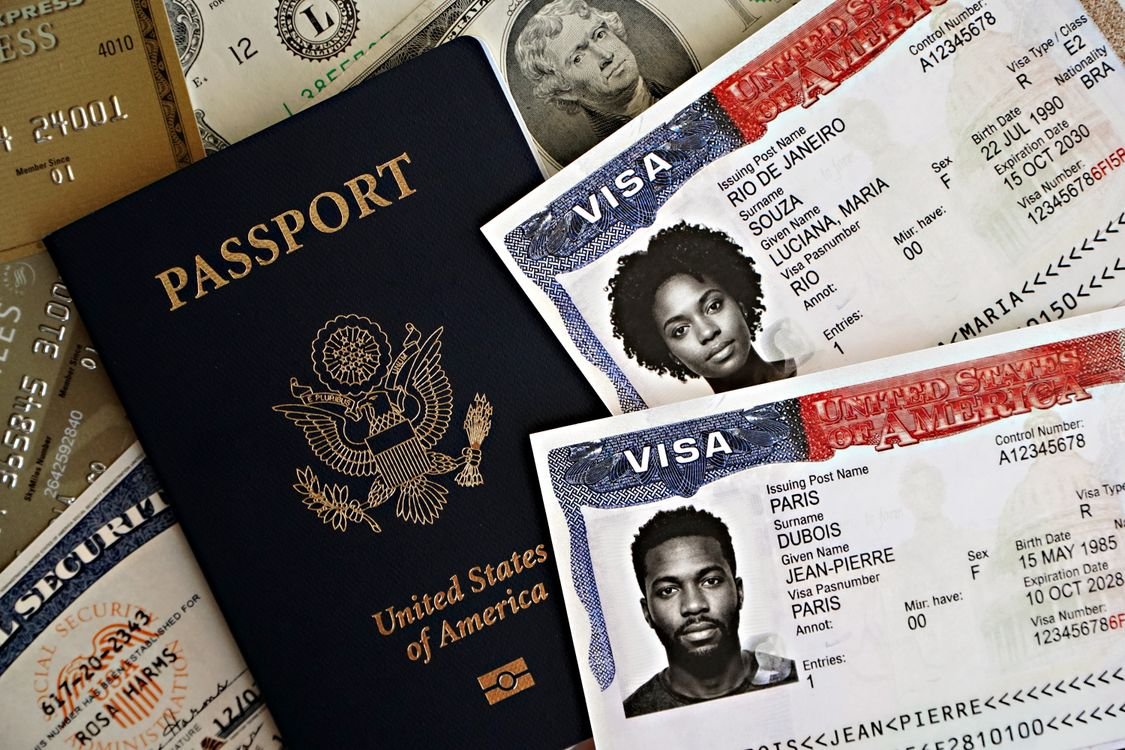
To study in the USA as an international student, you need an F-1 student visa. The process has four moving parts: an admission offer and a Form I-20 from a US school, a $350 SEVIS fee, a $185 visa application fee, and an in-person interview at a US embassy or consulate. The two mandatory government fees total $535, and a further $250 Visa Integrity Fee was created by 2025 legislation but was not being collected on the official fee schedule as of late October 2026 — so budget for $785 to be safe. This guide walks through every step in order, including the new social media rules that have applied to all F, M and J applicants since June 2025.
What Is an F-1 Student Visa?
The F-1 visa is the standard US visa for full-time academic study. It covers university degrees, college programmes, high school, and full-time language courses. Your spouse and unmarried children under 21 travel with you on F-2 visas if they come along.
It is not the only student visa. The J-1 visa is for exchange visitors — including many Fulbright scholars and some sponsored programmes — and the M-1 visa is for vocational and technical study. Most self-funded international students at US universities hold an F-1, so this guide focuses on it. If you are still choosing where to apply, our guide to scholarships in the USA for international students explains how to fund the degree before you reach the visa stage — the visa officer will want to see that funding is in place.
The F-1 visa is a nonimmigrant visa. That means you must show that you intend to return home after your studies, even if you later hope to work in the USA through Optional Practical Training (OPT). This “nonimmigrant intent” is the single most common reason visas are refused, and it comes up again in the interview section below.
F-1 Visa Requirements in 2026
You must meet all of the following before a visa can be issued:
- Admission to a SEVP-certified school. Your university, college or language school must be certified by the Student and Exchange Visitor Program (SEVP). Every legitimate US university is, but check before you pay any deposit — a school that cannot issue a Form I-20 cannot get you a visa.
- A Form I-20. Once you are admitted and have shown you can pay, the school issues your Form I-20, the Certificate of Eligibility for Nonimmigrant Student Status. It lists your programme, its start and end dates, your SEVIS ID number and the cost of attendance. Read it carefully when it arrives: a wrong name spelling, birth date or programme date will cause problems at the interview.
- Full-time enrolment. F-1 students must study full time — normally at least 12 credit hours a semester for undergraduates. Part-time study is not allowed except in a few narrow situations, such as your final semester.
- Proof you can pay. You must show you can cover the first year of tuition and living costs, and that funding is available for the rest of the programme. Bank statements, scholarship letters, sponsor affidavits and loan approvals all count, but the money must be real and accessible — officers check. Note that federal student aid is not available to most international students: our FAFSA Guide explains who qualifies and why. For a sense of the sums involved, a year at a US university typically costs $50,000–$80,000 in total, and our scholarships guide explains the awards that can close that gap.
- Ties to your home country. You must convince the officer that you will leave the USA after your studies. Family, property, a job offer or a clear career plan back home all help. This is assessed at the interview, not on paper.
- A valid passport. It must be valid for at least six months beyond your intended stay in the USA, with at least one blank page.
How Much Does an F-1 Visa Cost in 2026?
The certain government fees are $535. The table below breaks them down.
| Fee | Amount | When and how to pay |
|---|---|---|
| SEVIS I-901 fee | $350 | Paid online at fmjfee.com before your interview; pay at least 3 business days ahead |
| Visa application (MRV) fee | $185 | Paid when you schedule the interview, through your embassy’s payment system |
| Visa Integrity Fee | $250 | Created by 2025 legislation; not on the official State Department fee schedule and not being collected as of late October 2026 — budget for it in case collection begins before your visa is issued |
| Reciprocity / issuance fee | Varies by nationality, $0 to several hundred dollars | Only for some nationalities; check the State Department reciprocity table |
| Total for most applicants | $535 today ($785 if the integrity fee starts being collected) | Fees are non-refundable, even if the visa is refused |
A few points worth knowing. The SEVIS fee is tied to your SEVIS record, not to a single visa application, so if you defer to a new I-20 within the rules it may still be usable — check the I-901 guidance rather than automatically paying again. F-2 dependants pay no SEVIS fee, but each dependant pays the same $185 visa application fee. None of these figures include your English test, document translation, travel to the embassy, or the cost of getting to the USA — budget for those separately.
How to Apply for an F-1 Visa: Step by Step
Step 1: Get admitted and receive your I-20
Apply to SEVP-certified schools, accept an offer, and show the school your proof of funds. The school then issues your Form I-20. Do not start the visa process before you have it — the I-20’s SEVIS ID number is needed to pay the SEVIS fee, and the interview cannot happen without the I-20 itself.
Step 2: Pay the SEVIS I-901 fee ($350)
Pay online at fmjfee.com using your SEVIS ID from the I-20. Print the payment confirmation and keep it with your interview documents. Pay at least three business days before your interview so the payment registers in the system.
Step 3: Complete the DS-160 form
The DS-160 is the online nonimmigrant visa application, completed on the State Department’s website. It asks for your personal details, travel history, education and employment, and — since 2019 — every social media platform and handle you have used in the last five years. List them all, including accounts you no longer use. Omitting an account can be treated as misrepresentation, which can lead to a refusal and, in serious cases, permanent ineligibility. Upload a photo that meets the State Department’s rules and print the DS-160 confirmation page with its barcode.
Step 4: Pay the visa application fee and book the interview
Pay the $185 MRV fee through your embassy or consulate’s payment system, then schedule your interview. Apply in your country of nationality or residence: since September 2025 the State Department has directed applicants to apply at home rather than in a third country, and third-country appointments have become very hard to get. Book as early as you can — student visas can be issued up to 365 days before your programme start date, so there is no reason to wait until the last month.
Step 5: Set your social media profiles to public
Since 18 June 2025, all F, M and J applicants go through an online presence review, and the State Department instructs every applicant to set the privacy settings on all social media profiles to “public” so consular officers can review them. Do this before your interview and keep the profiles public throughout the process. Do not delete accounts in a panic — a sudden deletion looks worse than an ordinary profile. Officers do not ask for your passwords, and having no social media at all is not in itself a reason for refusal.
Step 6: Prepare your documents
Bring the originals and one set of copies to the interview:
- Passport, valid at least six months beyond your stay
- Form I-20, signed by you and by your school
- DS-160 confirmation page
- SEVIS fee payment receipt and visa fee receipt
- Visa appointment confirmation
- Admission letter from your university
- Financial evidence: bank statements, scholarship award letters, sponsor letters, loan approval
- Academic records: transcripts, diplomas, standardised test scores, English test results
- Proof of ties to your home country: family details, property documents, employment letters, or a job offer
Step 7: Attend the interview
Most applicants must now attend in person. Interview waivers for most applicants, including students, ended on 2 September 2025. Arrive early, dress smartly, and answer in English unless the officer offers another language. The interview is usually short — often under five minutes — so clear, honest, direct answers matter more than long explanations.
What Changed for F-1 Visas in 2025 and 2026
The F-1 process changed more in 2025 and 2026 than in the previous decade. Four changes matter most:
- Online presence review (June 2025). F, M and J applicants must set social media profiles to public, and every handle from the last five years goes on the DS-160. The review was later extended to other visa classes, but students were the first group covered and remain covered.
- Interview waivers ended (September 2025). Almost all applicants now interview in person, including students renewing a visa. Plan for the interview as a fixed step, not a formality that might be skipped.
- Apply at home (September 2025). Applicants are now expected to apply in their country of nationality or residence. If you are studying or working in a third country, do not assume you can interview there — check your local embassy’s policy first.
- Visa Integrity Fee (2025 legislation). A $250 fee at visa issuance was created by law in July 2025 and is structured as conditionally refundable if the holder complies with the visa terms and departs on time. It was not on the published State Department fee schedule and was not being collected as of late October 2026, but that can change — check the fee schedule before you pay anything.
One change that did not happen: in July 2026 the Department of Homeland Security published a final rule to replace “duration of status” — the rule that lets F-1 students stay as long as they are studying — with a fixed admission period of no more than four years. The rule was due to take effect on 15 September 2026 but was blocked by a federal court the day before, so duration of status still applies. Confirm the current position on the official Study in the States site before you travel, because this is still being litigated.
The F-1 Visa Interview: Questions and How to Prepare
The officer is trying to answer three questions: are you a genuine student, can you pay, and will you go home afterwards? Almost every question maps to one of those three. The most common ones are:
- Why did you choose this university and this programme?
- Why the USA rather than your home country or another country?
- Who is paying for your studies, and what do they do?
- What will you do after graduation?
- Do you have family in the USA?
- What are your plans if your visa is refused?
Prepare short, specific answers. “I chose Purdue because its aerospace engineering programme ranks among the best in the USA and offers the propulsion research I want for my career in my country’s aviation sector” is a good answer. “I have always dreamed of studying in America” is not — it says nothing about your programme, your funding or your plans. Know your university, your course, your costs and your funding sources cold, and be ready to explain them in your own words.
Three practical tips. First, keep answers consistent with your DS-160 — officers compare the two, and contradictions are the fastest route to a refusal. Second, bring financial documents even if the officer does not ask for them; being able to produce them instantly builds credibility. Third, do not memorise a script. Officers interview hundreds of students and can tell a rehearsed answer from a real one.
After Approval: Entering the USA and Staying in Status
If your visa is approved, the officer keeps your passport and returns it with the visa stamp, usually within a few working days. A visa can be issued up to 365 days before your programme starts, but you may only enter the USA up to 30 days before the start date printed on your I-20 — do not book a flight earlier than that.
At the border, a Customs and Border Protection officer checks your passport, visa and I-20 and admits you in F-1 status. Keep your I-20 with you when you travel, not in checked luggage. Once you arrive, report to your university’s international student office — the school must register your arrival in SEVIS.
Staying in status is your responsibility from then on. Study full time, do not work off campus without authorisation, and keep your I-20 and passport valid. On-campus work is allowed for up to 20 hours a week during term time and full time during holidays. After graduation, you can apply for Optional Practical Training (OPT) — 12 months of work in your field of study, or up to 36 months in total for STEM graduates. If you are weighing the USA against other destinations, our guide on how to choose a study-abroad country compares cost, visas and post-study work across the main destinations.
Common Reasons for F-1 Visa Refusals
Most refusals fall into a few categories, and most are avoidable:
- 214(b) — immigrant intent. The officer is not convinced you will return home. This is the most common refusal. Fix it with clear ties to home and a credible post-graduation plan, not with more money.
- Weak or unclear finances. Bank statements that do not cover the first year, funds that appeared in the account days before the interview, or a sponsor whose income does not match the commitment. Show stable, documented funding for the full programme.
- Inconsistent answers. Details in your interview that contradict your DS-160, your I-20 or your documents. Review everything before the interview so your story is the same everywhere.
- 221(g) — administrative processing. This is not a final refusal: it means the officer needs more checks, often on your background, field of study or social media. It can take weeks. There is little you can do to speed it up, but a complete, honest application reduces the chance of it.
- Choosing the wrong programme or school. A programme that does not match your academic background, or a school with a poor reputation, raises questions about whether you are a genuine student. If you are refused, you can reapply — but only after fixing the reason for the refusal, and you will pay the fees again.
Frequently Asked Questions
How much does an F-1 student visa cost in 2026?
The mandatory government fees are $350 for the SEVIS I-901 fee and $185 for the visa application fee — $535 in total. A $250 Visa Integrity Fee was created by 2025 legislation but was not being collected on the official State Department fee schedule as of late October 2026, so budget for $785 in case collection begins before your visa is issued. All fees are non-refundable if the visa is refused.
How long does an F-1 visa take?
It depends on your embassy. After you have your I-20, paying the SEVIS fee and completing the DS-160 takes a day or two. The wait for an interview appointment varies by country and season, from days to several weeks, so book as soon as you can. After the interview, approved visas are usually issued within a few working days, unless your case goes into administrative processing under section 221(g), which can take weeks.
Do I need an interview for an F-1 visa?
Yes, in almost all cases. Interview waivers for most applicants, including students, ended on 2 September 2025, so an in-person interview at a US embassy or consulate is now the norm. You should also apply in your country of nationality or residence rather than in a third country.
Do I really have to make my social media public for a US student visa?
Yes. Since 18 June 2025 the State Department has instructed all F, M and J applicants to set the privacy settings on all social media profiles to “public” for the online presence review, and the DS-160 asks you to list every social media handle you have used in the last five years. Officers do not ask for passwords, and having no social media is not itself a reason for refusal — but omitting accounts you do have can be treated as misrepresentation.
Can I work while studying on an F-1 visa?
Yes, with limits. You may work on campus for up to 20 hours a week during term time and full time during holidays. Off-campus work needs authorisation. After graduation you can apply for Optional Practical Training (OPT): 12 months of work in your field, or up to 36 months in total for STEM graduates.
When can I enter the USA on my F-1 visa?
Your visa can be issued up to 365 days before your programme start date, but you may only enter the USA up to 30 days before the start date on your I-20. Do not book a flight that arrives earlier. Bring your passport, visa and signed I-20 with you, and report to your university’s international student office when you arrive.

2 Comments
Pingback: GRE for US Universities 2026: Do You Still Need It?
Pingback: Cost of Studying in the USA for International Students